Eliza — AI Assistant for BNY Pershing INSITE 2025
AI assistant interaction patterns for wealth managers — shipped as part of BNY Pershing's INSITE 2025 platform.

The Problem
Wealth managers at BNY Pershing worked across a fragmented set of advisor platforms — trading, portfolio construction, investor servicing — each with its own information architecture. Finding answers to operational questions meant hunting through documentation, switching tools, or calling internal support. Advisor time spent searching for information was a measurable drag on productivity.
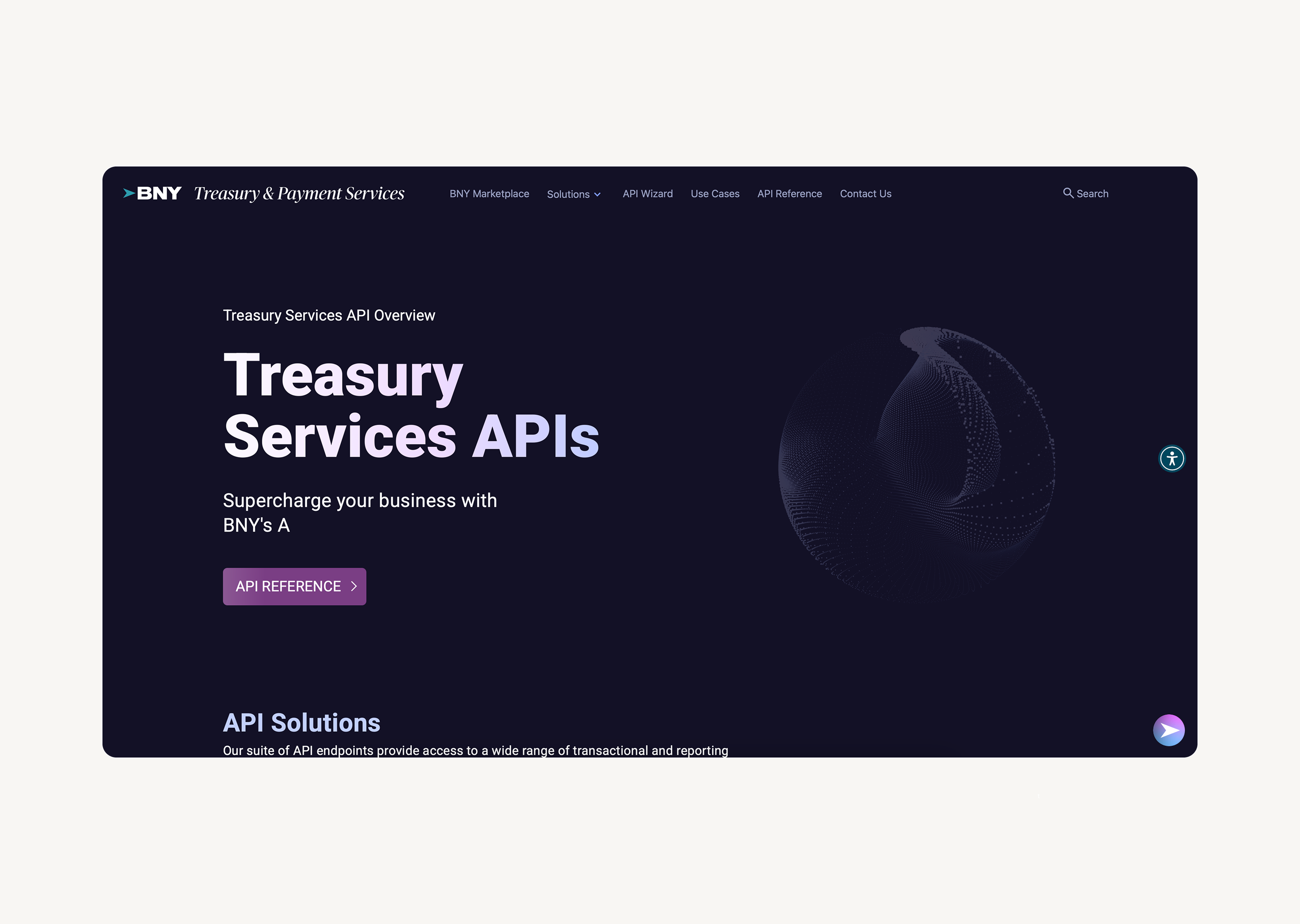
This aligned with BNY's publicly-announced INSITE 2025 strategy to modernize wealth-manager tooling, which was already introducing unified experiences like Wove Investor and NetX unification. Eliza needed to complement these by giving advisors faster access to operational knowledge inside the same surfaces, rather than forcing them to leave the workflow.
My Role
I was Lead UI/UX Designer on the BNY Pershing design team, contributing to the Eliza AI agent work as part of the broader INSITE 2025 effort. My contribution included designing AI assistant interaction patterns — entry points, conversation flows, response states, error states, and feedback loops — and building Figma design system components used across Eliza and adjacent INSITE surfaces (NetX Investor unification, Wove components). I collaborated with the broader design team and engineering on React handoffs and cross-browser compatibility.
Constraints
- Regulated environment — BNY operates under strict financial-services compliance. Legal disclaimers, data-handling notices, and AI transparency language were non-negotiable.
- Trust threshold — advisors making investment decisions cannot act on confidently-wrong AI output. The interaction patterns had to design around AI uncertainty, not hide it.
- Existing platform constraints — Eliza had to live inside existing Pershing/INSITE advisor tools, inheriting their visual system and IA.
- Cross-team coordination — Eliza interacted with multiple product areas (NetX Investor, Wove, account services), each with their own product owners.
Insights
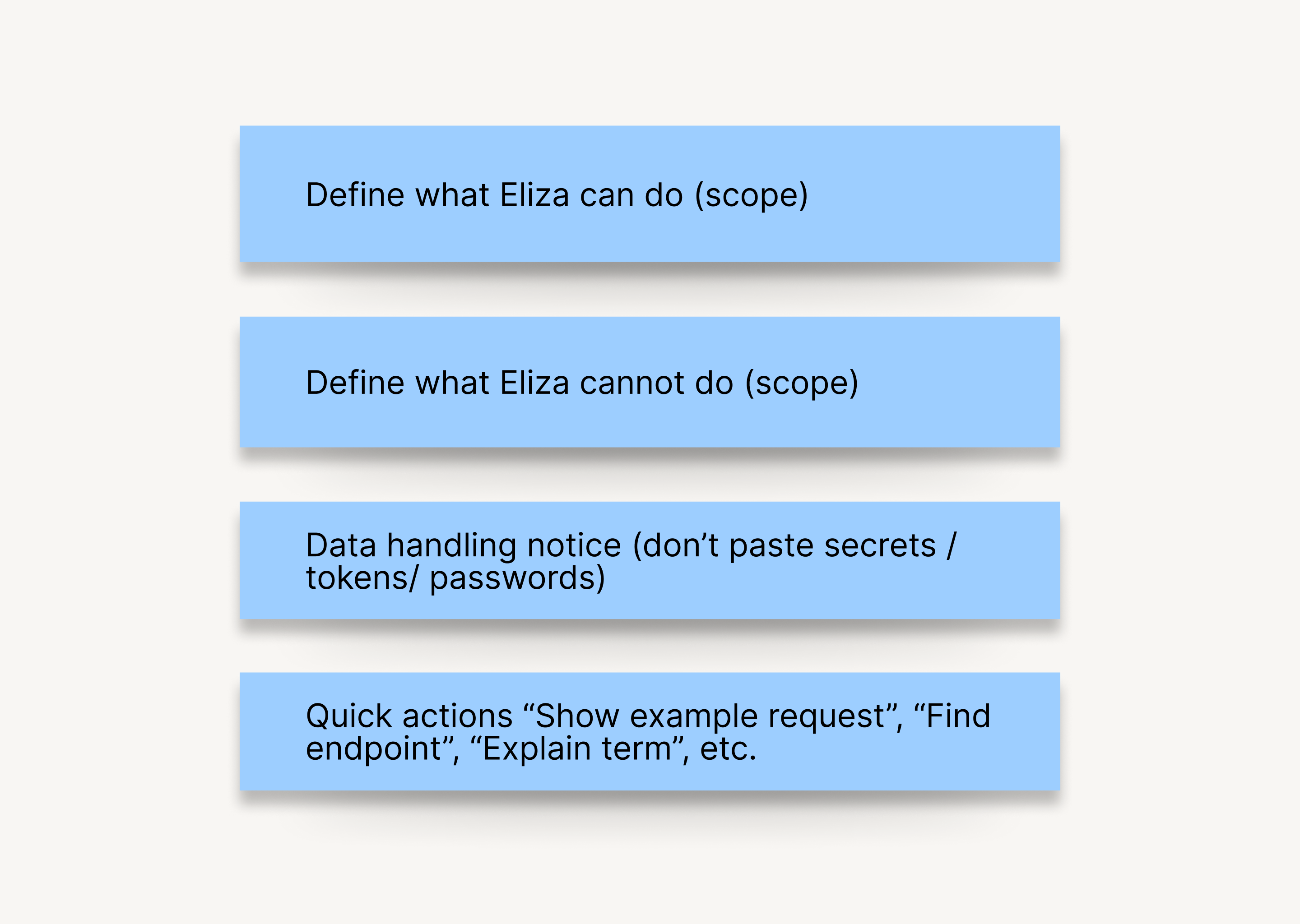
AI safety is a UX problem, not just a model problem. The team's design framework for Eliza treated AI guardrails as interface concerns — scope definitions ("what Eliza can and cannot do"), explicit data-handling notices ("don't paste secrets, tokens, or passwords"), and prominent "Powered by Eliza" disclaimers framing every response as machine-generated.
Designing for uncertainty matters more than designing for correctness. Most AI products in 2024–2025 over-optimized for fluent answers and under-designed for "I'm not sure." The Eliza patterns included explicit uncertainty states — when Eliza could not confidently answer, the response showed related topics or asked a clarifying question rather than guessing.
Feedback isn't an afterthought. Every response carried a rating mechanism and an optional free-text reason field for low ratings. This served two purposes: gathering signal for ongoing improvement, and giving advisors agency when responses fell short.
The rest of this case study is password protected
This case study covers confidential enterprise work. If you're a recruiter or hiring manager, email me for access and I'll share the password.
Request access →